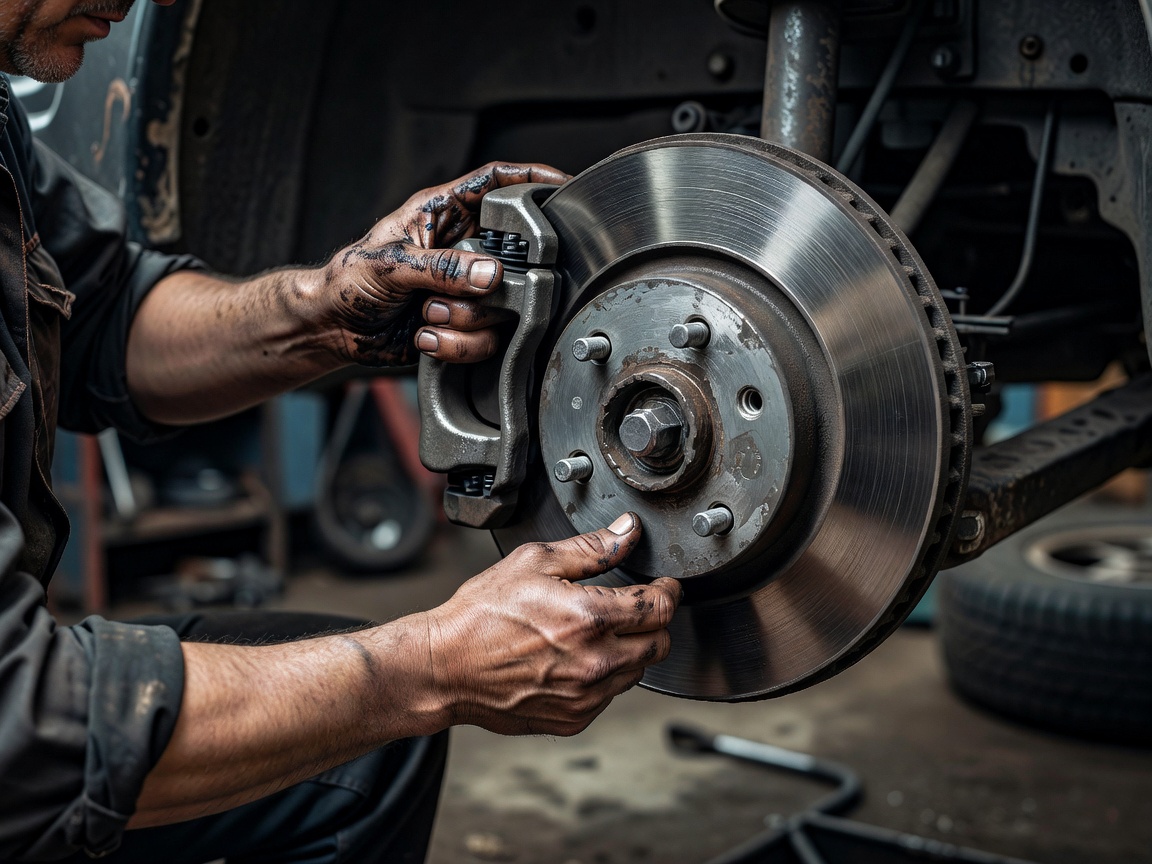
Serious brake symptoms—such as the pedal going to the floor, sudden loss of braking power, or heavy grinding noises—should be professionally inspected immediately. Do not attempt dangerous DIY repairs on critical safety systems.
Brake Pads
Brake pads are designed to wear down as they create friction against the brake disc. During an inspection, the remaining friction material thickness is measured. Thin pads can lead to reduced braking efficiency and eventual damage to the brake discs.
Brake Discs (Rotors)
Discs are inspected for minimum thickness, deep scoring, rust lips on the edges, and signs of overheating (bluing). Uneven disc surfaces can cause vibrations felt through the brake pedal or steering wheel.
Brake Fluid
Brake fluid is hygroscopic, meaning it absorbs moisture over time. This lowers its boiling point and can lead to a spongy brake pedal under heavy use. Visual inspection and moisture testing help determine if fluid replacement is necessary.
Calipers
Calipers house the pistons that push the pads against the discs. They are checked for fluid leaks, torn dust boots, and to ensure the slide pins move freely, preventing uneven pad wear.
Common Warning Indicators
- Unusual Noises: Squealing usually indicates low pads (many have acoustic wear indicators). Grinding suggests metal-to-metal contact.
- Vibration: Shaking in the steering wheel or pedal when braking often points to disc issues or pad material transfer.
- Pulling During Braking: If the vehicle pulls to one side, it may indicate a seized caliper or uneven hydraulic pressure.
- Dashboard Lights: Warning indicators can mean low fluid, worn pads (on sensor-equipped vehicles), or an ABS system fault.