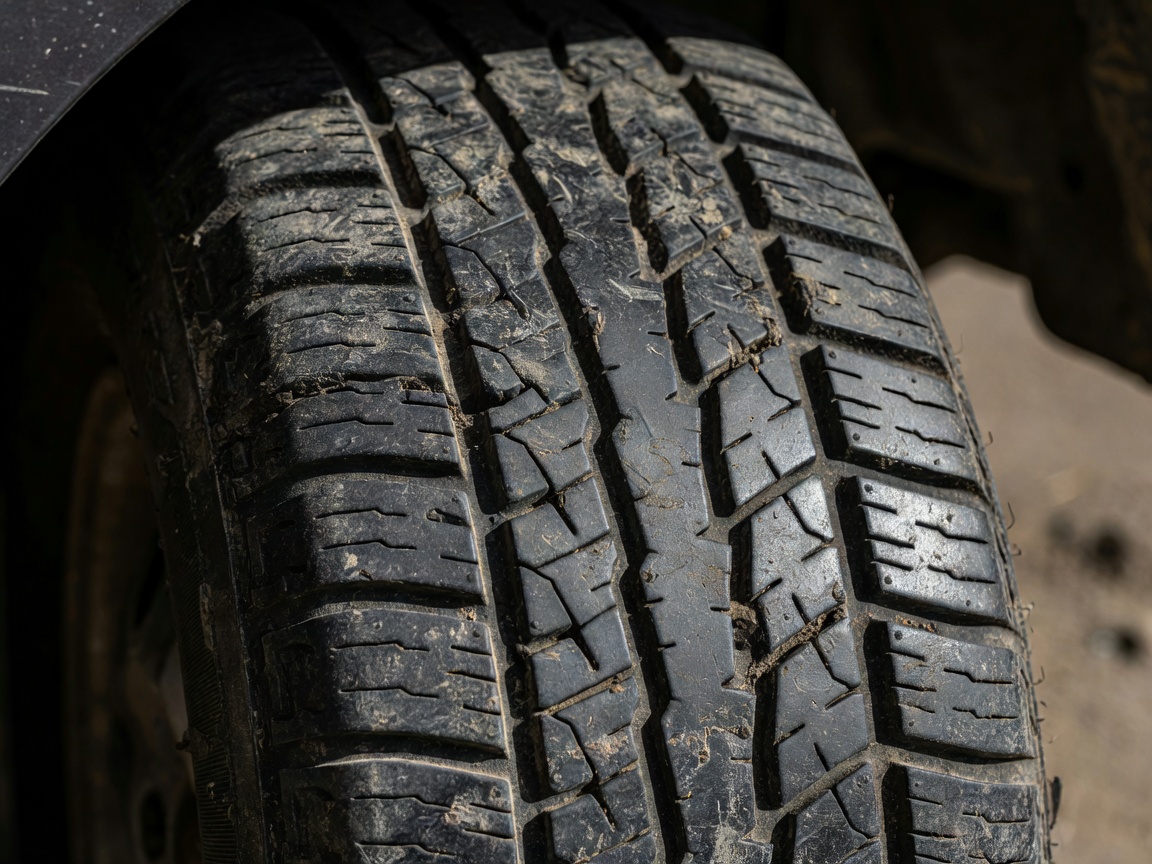
Tread Condition
The tread pattern on your tyres is designed to disperse water and provide grip. We look at the overall depth across the central three-quarters of the tyre. While local regulations dictate minimum legal limits, performance in wet conditions typically begins to degrade well before this limit is reached.
Uneven Wear
Tyres rarely wear perfectly evenly, but severe uneven wear patterns usually indicate an underlying issue. Excessive wear on both outer edges often points to under-inflation, while wear in the center suggests over-inflation. Heavy wear on just one edge (inner or outer) usually indicates an alignment or suspension geometry issue.
Tyre Pressure
Maintaining correct tyre pressure is essential for safety, fuel economy, and tyre longevity. Pressures should be checked when tyres are cold, as heat from driving increases the internal pressure.
Visible Damage
Sidewall inspections look for cuts, bulges, or perishing (cracking due to age or UV exposure). A bulge in the sidewall typically indicates internal structural damage to the tyre carcass and requires immediate attention.
Seasonal Considerations
In regions experiencing distinct seasons, using tyres suited for the climate is critical. Winter tyres use different rubber compounds that remain flexible at lower temperatures, whereas summer tyres may harden and lose grip in the cold.
Wheel Inspection
Beyond the rubber, the alloy or steel wheels themselves are checked for bends, severe curb damage, or signs of cracking, which can lead to slow air leaks or vibration at speed.