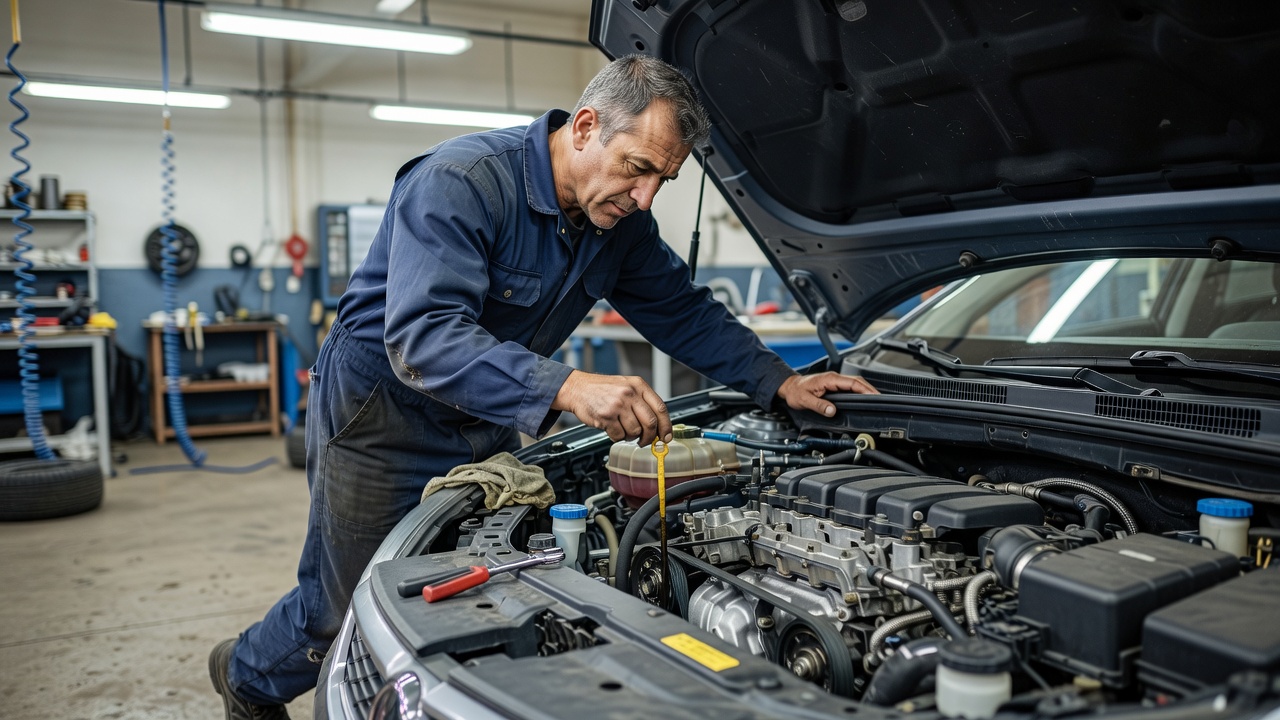
A routine vehicle service is fundamental to maintaining reliability. Exact work requirements depend on vehicle age, mileage, overall condition, and specific manufacturer guidelines.
1. Vehicle Information Gathering
Before physical work begins, we review the vehicle's maintenance history if available, noting the current mileage and any specific symptoms reported by the driver. This context helps determine if standard service intervals apply or if additional targeted checks are necessary.
2. Initial Visual Inspection
The vehicle undergoes a general walk-around to check exterior lighting, wiper blade condition, and visible signs of damage or leaks that might require immediate attention.
3. Maintenance Checks (Under the Hood)
The engine bay is inspected for obvious wear. We assess the condition of accessible drive belts, inspect hoses for signs of cracking or bulging, and check battery security and terminal condition.
4. Fluid and Filter Assessment
This is the core of most routine services. Engine oil condition is checked, and replacement of oil and the oil filter is typically planned based on service intervals. Other essential fluids—including coolant, brake fluid, and power steering fluid (if applicable)—are checked for proper levels and visual condition.
5. Visible Component Checks (Underbody)
With the vehicle raised, a visual inspection of the underbody is conducted. This includes looking at the exhaust system for secure mounting and leaks, checking visible suspension components for signs of failure, and inspecting brake lines.
6. Diagnostic Considerations
If warning lights are present or the vehicle has complex electronic service monitoring, a brief diagnostic scan may be performed to identify any stored advisories that warrant further investigation.
7. Maintenance Recommendations
Based on the inspection, a summary of current vehicle health is created. This highlights any items that require urgent replacement versus components that are simply showing normal wear and should be monitored.
8. Final Service Notes
It is important to note that a routine service is primarily preventative. Recommended maintenance can vary greatly depending on the vehicle's condition, and no single service covers every possible mechanical failure.